
Rode Dromer (Red Dreamer): A Story for Bi-cultural Kids Everywhere
by J.K. Mellis
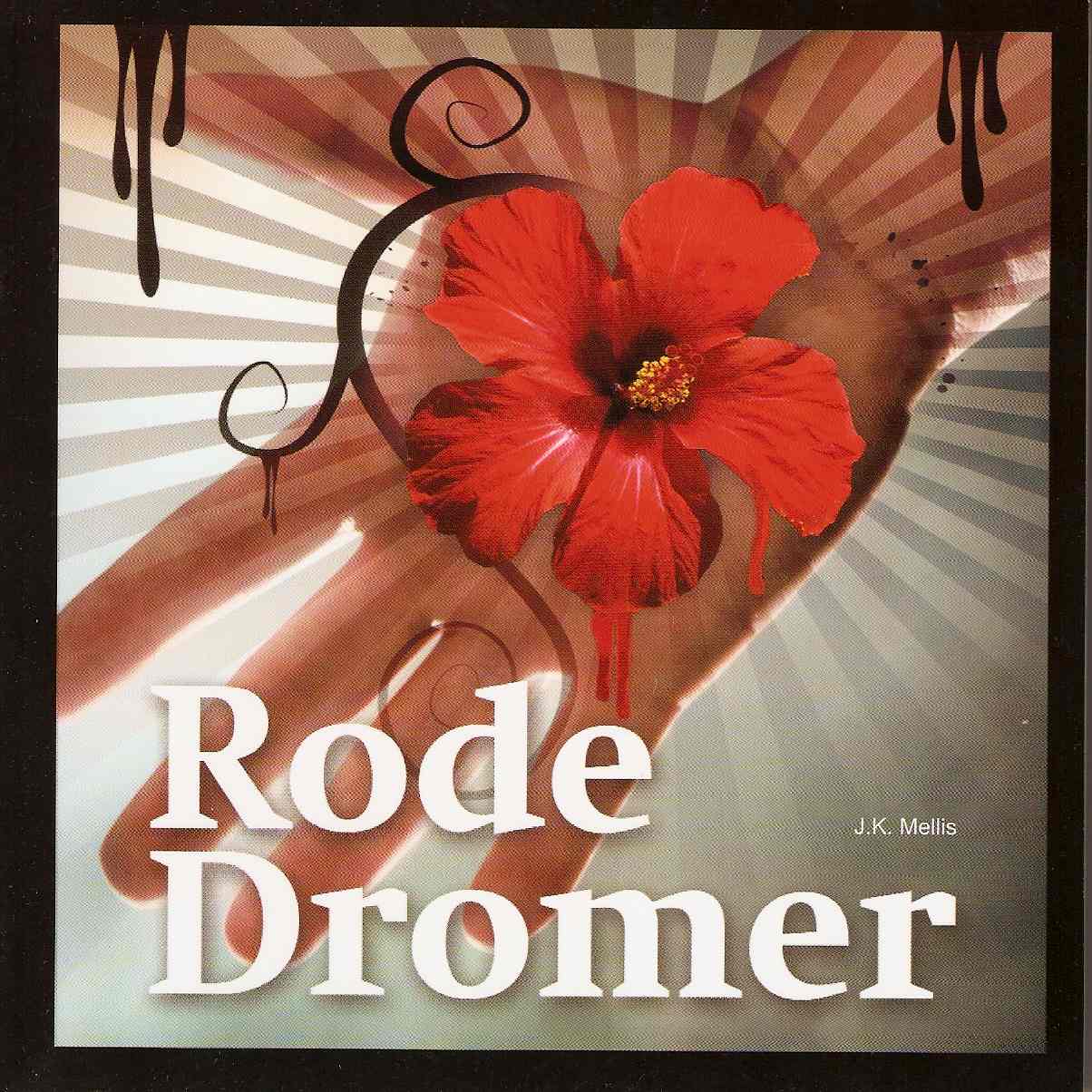
Cover of 2008 Dutch Edition
THE STORYLINE
The story, set in Amsterdam, begins in a high school classroom, introducing the three main characters: Mustafa, the son of Rif-Berber immigrants from Morocco; Sara, a Venezuelan whose father is the pastor of a Spanish-speaking church in the city; and Gülsüm, Sara’s neighbor and the daughter of Turkish immigrants. As Mustafa heads home on the bus, he reflects on a dream he had the previous night, about a red flower. A sign on a building he is passing causes him to exit the bus, where he runs into Sara and Gülsüm outside an art-café called, ‘Foolish Things’. This leads to the discovery that Sara is Jewish as well as Christian. Also to an encounter with Sara’s dad, and to further reflections by Mustafa: about his relationship with his own dad, and about a painful family tragedy involving his older sister. The rest of the story plays out: in Mustafa’s home, in a ‘religion’ class at the high school, and in the art-café.
BACKGROUND
This book was written primarily for second-generation immigrant youth living in Europe, who are emerging into adulthood as participants in more than one cultural group. For example, it represents an attempt to answer some of the questions Muslim youth in the Netherlands were asking Christians about their beliefs. Questions like: Do you really worship three gods? Why do you call Jesus ‘the Son of God’ and claim that he died by crucifixion when the Quran appears to contradict both ideas? And hasn’t the Bible been changed over the years? Yet these Muslim young people attend schools alongside an ever-increasing number of bi-cultural immigrant youth from non-Western Christian cultures. So this story also tries to answer questions about Christian beliefs in a way that speaks to young people in general, especially those growing up with multiple identites. And since Western Christians no longer represent the majority of Christians in the world, Rode Dromer is also written to help indigenous European Christians take a fresh look at the Gospel of Jesus/Isa, from a non-Western perspective.
The original English version of Rode Dromer (Red Dreamer) is available to members of this website on this page.
ABOUT THE AUTHOR
Drs. J.K. Mellis is an anthropologist, theologian and storyteller: who has lived over 50 years in the Netherlands, where he and his wife raised two bi-cultural, bi-lingual kids. They have seven grandchildren. For his other books (Abu Sharif, the Mystery of the Hundredth Name, and The Good News of the Messiah by the Four Witnesses). See Books by J.K.Mellis.
WHAT READERS HAVE SAID ABOUT RODE DROMER (RED DREAMER)
Yousuf, Egypt/NetherlandsI read Rode Dromer with a great deal of pleasure. In my opinion, it is more than just a story; it is real, because I know that such things happen. I think that with this story you will get many, many young people thinking, especially when they come to understand Jesus as our eldest brother. This is a very inspired story.
Wahid, Afghanistan/NetherlandsI just finished reading this interesting story and believe me, I could not hold my tears while reading. Rode Dromer is just wonderful and I am sure it will speak to the hearts of many people.
Reyald, HGJP, NederlandI was deeply moved by this splendid book. Jesus told ordinary and recognizable stories to explain the challenging message of God’s love and his kingdom. Mellis begins with the questions of Muslim youth, like, ‘Do Christians pray to three gods?’ In an ingenious way, he weaves such questions into a story. Nowhere is the story coercive and it is an easy read. It is told from the perspective of a Muslim culture, and in this way you are challenged—as a Muslim and as a Christian to seek out the meaning of Jesus/Isa for our contemporary world and cultures. Thus Rode Dromer attempts to build bridges. Without mutual understanding you can’t talk with each other. I’ve already come to understand a lot more about a Muslim culture, but also about Jesus. Rode Dromer is a beautiful and well-written book—one to read, even read aloud, and one to stimulate much discussion and reflection.
HOW TO USE RODE DROMER (RED DREAMER) - Suggestions by the author
Give the booklet to Muslim youth who ask questions about the Christian faith, and read it yourself!
If a young Muslim high school student were to ask you why Christians believe in three gods, how should you respond? With a clear, well reasoned explanation, of course. But how much would come across as 'foreign' because of they way your own culture 'colors' the style and content of your answer? Jesus answered questions by telling stories. And he used images familiar to his listeners. Such an answer in story form encourages the questioner to think more deeply about the issues raised. Young people, especially those from 'non-Western' families, prefer stories. Rode Dromer attempts to use real images from the 'cultural world' of Muslim immigrant youth in the Netherlands. The aim is to help build a 'bridge' between your world and theirs--so you can better understand their stories and so they can better understand the Good News about Jesus.
Let the booklet challenge you: to a bigger view of the Gospel AND to how you live it.
When you read Rode Dromer you will encounter a presentation of the Gospel that is no doubt unfamiliar. If you feel uncomfortable with this approach, you're in good company. Jesus' disciples were often surprised by his unorthodox approaches when he led them in cross-cultural witness (see John 4:1-42; Acts 10:1-11:18). Our usual presentations of the Gospel and the cross tend to emphasize such familiar themes as: the blood sacrifice of God's Son (the Lamb) as proof of God's love and as legal transaction that solves the problem of sin. But there are other Gospel themes in the New Testament which resonate more with Muslim peoples: the mystery of God's will (to be our Father)--revealed in God's Word made flesh and in the powerful blessing of the Spirit; and God's power in the life, death and resurrection of our Eldest Brother to restore the family honor and restore us to the family.
Hold a discussion with your co-workers about how to put into practice the new things you've learned.
The most powerful witness comes when our lives match our words. It's not enough to just have a better 'contextualized' presentation. Does knowing Jesus help you worship and know God better as your Father (Jn.4:21-23)? What does it mean to act like his adult sons and daughters in the authority of the Holy Spirit? Does this affect how you relate to young people? To your Muslim neighbors?
Learn to sit and receive, to ask questions and listen without being defensive or 'problem-solving'.
A Muslim-background-believer once told me: 'When people from the West share the Gospel with Muslims, it reminds me of a person trying to pour milk from a pitcher into a cup full of honey. The milk spills over the sides of the cup, because you don't take time to first get the honey out. You do all the talking! You have to get them to talk. "Out of the heart, the mouth speaks". As you sit and receive their hospitality, listen to them and ask them questions (Lk.6:45; 2:46), "honey" comes out of their heart and makes room for the Gospel.' Ask Muslim youth what parts of Red Dreamer they identify with. In what ways are their experiences different?
SOME ADDITIONAL SUGGESTIONS:
Invite 'bi-cultural' young people, Christian as well as Muslim, to talk in your group about the difficulties of reconciling multiple identities and living in different cultural 'worlds'.
Red Dreamer also emphasizes the importance of Dutch Christians listening to the experiences and perspectives of non-Western Christian immigrants living in Dutch society. Christian immigrant youth in Dutch society also grow up in two cultures. They have many of the same identity and acceptance struggles as Muslim immigrant youth. Are there bi-cultural youth in your group? Are there immigrant churches in your city?
Build a two-way relationship (receiving and giving) between your (church) youth group and one from a non-Western 'immigrant' church.
Discuss ways your youth group (or your church) can demonstrate the new reality in Christ: that 'through the gospel' all ethnic groups [Greek ethne] are 'heirs-together'. How can this 'mystery' be 'administered' in our churches now so that the 'many sided wisdom of God' will be made known (Eph.3:6,9-10)--and so that immigrants from all ethnic groups [Greek ethne] can feel that their culture also has glory and honor to bring to Jesus (Rev.21:26).